The Leather Manufacturing Process

Leather is a natural, durable, and versatile material created through a carefully controlled series
of processes. At our tannery, we combine traditional craftsmanship with modern technology to
transform raw animal hides into high-quality finished leather suitable for footwear, upholstery,
garments, accessories, and industrial applications.

1. Raw Material Selection

The leather-making process begins with the careful selection of raw hides and skins, primarily sourced from cattle, buffalo, sheep, and goats. These hides are by-products of the meat industry.

2. Preservation of Raw Hides

Fresh hides are highly perishable and must be preserved immediately to prevent bacterial decay.
Preserved hides are transported to the tannery for processing.
Common preservation methods:

• Salt curing: Applying salt to remove moisture and inhibit bacterial growth
• Chilling or freezing: Used mainly for short-term storage
• Drying: Less common due to risk of stiffness and damage

3. Soaking

The first wet process in the tannery is soaking. It is done in large drums using clean water and
mild additives.


Purpose of soaking:
• Rehydrate dried or salted hides
• Remove dirt, blood, salt, and soluble proteins
• Restore the hide to its natural moisture content

4. Liming and Unhairing

This stage removes unwanted components and prepares the hide structure. The result is a clean,
dehaired hide called a pelt.
Processes involved:

• Hair removal
• Removal of epidermis
• Partial removal of natural fats and proteins
• Swelling and opening of fibre structure
Chemicals commonly used:

• Lime (calcium hydroxide)
• Sodium sulphide or alternative eco-friendly agents

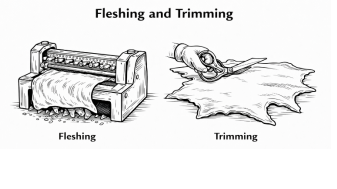
5. Fleshing and Trimming

Mechanical operations remove excess tissue. This step improves uniformity and cleanliness.

• Fleshing: Removes fat, meat, and connective tissue from the flesh side
• Trimming: Removes uneven edges and defects

6. Delimbing and Bating

These processes refine the fibre structure. This step is critical for achieving softness and feel.

Delimbing:

• Removes residual lime
• Reduces swelling
• Adjusts pH to prepare for enzymatic treatment

Bating:

• Uses enzymes to soften the hide
• Improves flexibility, smoothness, and grain quality

7. Pickling

At this stage, the hide is ready to be tanned. Pickling prepares the hide for tanning.

Key actions:

• Lowering the pH using acids
• Adding salt to prevent swelling
• Preserving the hide temporarily

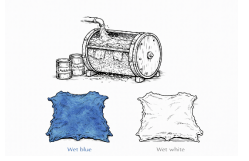
8. Tanning

Tanning is the most important step it converts raw hide into leather, making it durable, flexible,
and resistant to decay. After tanning, the material is called wet blue (chrome) or wet white (nonchrome)

Tanning Methods

Chrome Tanning

• Uses chromium salts
• Produces soft, flexible, and heat-resistant leather
• Widely used for footwear, garments, and upholstery
Vegetable Tanning
• Uses natural tannins from bark, wood, and plants
• Produces firm, natural leather with rich character
• Common for belts, bags, and saddlery

Other Methods

• Aldehyde tanning
• Synthetic tanning
• Combination tanning

9. Splitting and Shaving

To achieve the desired thickness splitting and shaving has been done for uniform thickness that
is essential for quality and performance

• Splitting: Divides thick hides into layers (grain split and flesh split)
• Shaving: Precisely adjusts thickness for consistency.

10. Retanning, Dyeing, and Fat liquoring

These processes enhance the leather’s final properties.

Retanning:
• Improves fullness, softness, and grain tightness
• Customizes leather for specific applications

Dyeing:
• Adds color using drum dyeing or surface dyeing
• Ensures color penetration and consistency

Fat liquoring:
• Introduces oils and fats
• Provides softness, flexibility, and durability

11. Drying

Leather is dried using controlled methods to maintain quality. Proper drying prevents shrinkage and stiffness. Common drying techniques:

• Vacuum drying
• Toggle drying
• Air drying

12. Conditioning and Mechanical Finishing

After drying, leather undergoes mechanical treatments:

• Softening and staking
• Milling for enhanced softness
• Buffing or snuffing for nubuck or suede

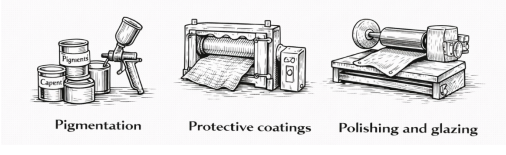
13. Surface Finishing

Surface finishing enhances aesthetics and performance.

Finishing options include:

• Pigmentation
• Protective coatings
• Embossing (grain patterns)
• Polishing and glazing

Finishing determines:

• Gloss or matte appearance
• Water resistance
• Scratch resistance

14. Final Inspection and Quality Control

Each hide is inspected to ensure:

• Color uniformity
• Thickness consistency
• Absence of defects
• Compliance with customer specifications